
El verdadero significado de la Navidad
Monday, December 22, 2008
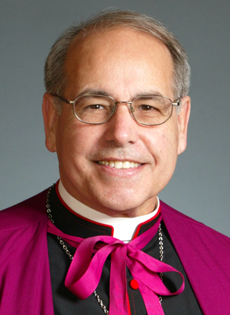
*Bishop Felipe Estevez
La contribuci�n cat�lica a la temporada festiva es ampliar el sentido de las
fiestas al tomar la Encarnaci�n del Verbo como punto central. Por un lado, esto
evita el apuro de la anticipaci�n que promueve la comunidad empresarial, pues
esta es la temporada que le representa la mayor prosperidad. La mentalidad
cat�lica protesta el �nfasis exagerado en el consumismo, a la vez que evita
poner fin a la temporada antes de que termine. Los cat�licos le recuerdan al
pr�jimo que a�n hay m�s.
Si prestamos atenci�n, hay una magia en la �poca navide�a que toca a todos. Hay
cantos e himnos que se escuchan e interpretan en esta temporada solamente; hay
reuniones familiares y tarjetas que se env�an a muchas personas, familiares y
amigos s�lo durante esta �poca del a�o. Los ni�os la esperan con entusiasmo y
expectativa. Las decoraciones hacen que la ciudad y los edificios brillen de una
manera intensamente atractiva para los sentidos.
Sin embargo, los cristianos cat�licos tienen una manera particular de celebrar
esta temporada. Los cat�licos celebran la Navidad por un per�odo de tiempo m�s
prolongado que el resto de la gente. Para los cat�licos, la temporada navide�a
comienza con un per�odo largo y prudente llamado el Adviento. Su prop�sito es
preparar al coraz�n para que sienta la esperanza en la venida del Se�or. El
profeta Isa�as anunciaba el tema de la esperanza y el optimismo. En las
parroquias, es una pr�ctica com�n realizar campa�as caritativas para ayudar a
los ancianos, a los enfermos, y a las personas excluidas de las celebraciones
familiares. Este es un tiempo en el que la mayor�a de los cat�licos acude con
buenas resoluciones al sacramento de la reconciliaci�n para encontrar la
sanaci�n.
En ocasiones, al caminar por mi vecindario el d�a despu�s de la Navidad, me
sorprende ver la rapidez con la que desaparecen los �rboles navide�os y las
decoraciones. Pero los cat�licos s�lo han llegado a la mitad de la temporada.
Justo despu�s de la Navidad, hay ocho d�as (una octava) de fiestas importantes,
con hermosas lecturas e himnos. El Domingo despu�s de la Navidad, celebramos a
la Sagrada Familia de Nazaret. El 1ro de enero nos concentramos en Mar�a, como
Madre de Dios. Tambi�n es un d�a universal de oraci�n por la paz mundial, cuando
el Santo Padre nos ofrece un mensaje que es predicado al mundo entero; el tema
del mensaje para 2009 ser� �Combatir la Pobreza, Construir la Paz�. El primer
Domingo del nuevo a�o celebramos la Epifan�a, una historia que solamente se
encuentra en el Evangelio de San Mateo. Representa al mundo, simbolizado por los
tres reyes, quienes rinden honor y adoraci�n al Rey de la Gloria, al Salvador de
todos. La temporada navide�a concluye con la celebraci�n del Bautismo de Nuestro
Se�or, que tiene lugar a mediados de enero.
Estamos en deuda con el calendario lit�rgico, pues la liturgia de la Iglesia es
la que establece una cultura de celebraci�n y oraci�n. Dice el salmista: �Gusten
y vean qu� bueno es el Se�or�. Las pr�cticas lit�rgicas, y la religiosidad
popular que les rodea, nos motivan a celebrar de manera comunitaria el misterio
fundamental de Dios quien, por Su amor incre�ble, se atrevi� a ser uno de
nosotros en Jesucristo.
�C�mo celebra la temporada navide�a en su hogar? �Se acuerda de celebrar la
�poca del Adviento en su totalidad?
Msgr. Felipe J. Est�vez, S.T.D.
Obispo Auxiliar de Miami


Comments from readers
Without doubt the generosity and humility of God is infinity. "being rich to become poor for our cause, then we to become rich with spiritual gifts" (Ph 2). the way as we to learn says our holy fatheer to reach the glory and to tranform the poor reality to living with dignity and justice then the Lord Jesus Christ peace will reign all over the world!
Priest Emilio Lab�n from Paita - Piura- Peru.
During the Advent season, as the city lights up and we rush to get "ready for Chistmas", I often wonder if instead our souls are driven away from the Lord more than ever. So lilttle time is left to stop, be in silence, reflect, pray and truely get ready. Luckily, we might occasionaly drive by a Nativity scene where we are shortly reminded of the true reason for the season. It looks like the reason for the season is either Frosty or Rudolph or Santa, a winter scene, the company party, cards with children's pictures, family and friends or even "giving". Yes, it is the season for all of these but none of these should drive us apart from His presence in our hearts and the joy of having Him within us during the season and throughout our lives. With this love and joy in our hearts for Him, we should live our lives, put up every decoration, pack every present and participate in the Liturgies, for He is the true reason for the season and He is the greatest LOVE there is. As you said, harshly, all stops the day after Christmas, then comes January with the New Year's feast, football games, and going back to work and the same routine. Have we by then forgotten the ongoing feast or have we not ever been part of it? Thank you for reminding us to follow the spiritual guidance of the Liturgical Calendar of our Catholic Church.
May the Lord be always with us, that is my wish to all, and may the Feast of the Three Kings show us the wisdom to always search for the Lord.
The way we celebrate Christmas in our home is by trying to understand its whole message, one of spending time with each other. It can be related to the feast of the Holy Family, falling under the Christmas season. Furthermore, we learned from our ancestors in Spain (on my mother's side) that Christmas is not a one day event, but many days. The tree is removed once the Epiphany has concluded. In addition, we say "Merry Christmas" to our friends and family during the many days, not December 25. If not, would we taste and see the goodness of the Lord?
The liturgical calendar of the Church, as Bishop Estevez mentions, allows us all to pause, acknowledge, and celebrate the numerous miracles of God and their significance for our lives. Further, the Catholic Christmas liturgical celebrations bring together the entire Catholic family to celebrate the awesome Incarnation of the Word. It thus fosters community, which is essential in today�s fragmented world when playing playstation or surfing the internet is replacing face-to-face engagement with family and friends.
And lastly, as Bishop Estevez says, the liturgical celebrations of the Church encourage a sense of social justice, for �It is a common practice in parishes to have charitable drives reaching out to the elderly, the sick, and people who are left out of family celebrations.� Matthew 25 clearly serves as a reminder to us that serving the least in our world is tantamount to serving Jesus, since he is found especially in those that society considers the least.
So, Christmas season � which does not end on December 25 � is a time to celebrate many facets of the human experience, such as relationships with relatives and friends, our lives, the little things we constantly take for granted, the hope and optimism found in those who emulate Jesus by serving the vulnerable, and, of course, the one who inspires all: JESUS!
Thank you, Bishop Estevez, for a great and timely article!