
From Halloween to All Souls’ Day, our Catholic faith offers hope beyond death and the promise of eternal life
Beyond Halloween: We believe in life everlasting
Thursday, October 29, 2026
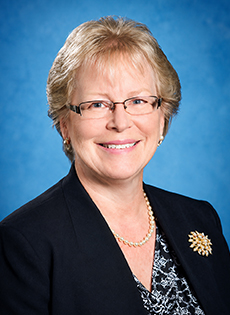
*Mary Jo Frick CCCE
Every fall, as the seasons change, our weather cools down and twilight arrives a bit earlier, our culture turns its attention to the unseen. Cobwebs decorate front porches, store windows showcase skeleton motifs, and late-night television turns to stories of ghosts and the hereafter.
It is easy to dismiss this seasonal fascination as harmless entertainment. Yet beneath the costumes and haunted tales lies a quiet, universal truth: human beings are uniquely captivated by what happens after this life. We long to know that our stories do not end in the silence of the tomb and that those we love remain connected to us.
As Catholics, we do not look to the evening shadows for answers about eternity. We look to the empty tomb of Jesus Christ. Our faith offers a profound answer to humanity’s deep curiosity about death—not one of fear or specters, but of ultimate hope and dignity.
From Halloween to All Souls’ Day
Halloween takes its name from All Hallows’ Eve, the evening before All Saints’ Day. “Hallows” is an older word for saints. The Church honors all the saints in heaven on All Saints’ Day, Nov. 1, including those who have never been formally canonized. All Souls’ Day, Nov. 2, is dedicated to praying for the faithful departed undergoing purification before entering the fullness of heaven.
These closely linked days invite us to look beyond the season’s ghosts and skeletons and consider death in the light of Christ’s resurrection. They remind us of our hope in eternal life and our responsibility to continue loving those who have died through prayer, entrusting them to God’s mercy.
Why we pray for the dead
Prayer for the dead is one of the Church’s spiritual works of mercy. The Catechism teaches that those who die in God’s friendship but still need purification are assured of salvation. Purgatory is this final purification, through which they are prepared for the holiness of heaven. We pray for them with confidence in God’s mercy, asking that they be welcomed into the fullness of his presence.
The Church has offered prayers for the dead from its earliest days, especially through the Holy Sacrifice of the Mass. Requesting a Mass for a deceased loved one is a profound act of love. We can also offer the rosary, undertake works of charity or simply pause each day to pray for the repose of a soul.
These prayers express our belief in the communion of saints. The faithful on earth, the souls undergoing purification and the saints in heaven remain united in Christ. We belong to a family of faith whose care for one another reaches beyond death. All Souls’ Day reminds us to pray also for the forgotten, including those whose names we do not know.
The body and the promise of resurrection
Equally important is ensuring that our final resting place reflects our faith. In my ministry serving families at our Catholic cemeteries, I witness firsthand the widespread confusion today regarding what constitutes a proper Catholic burial. Modern trends often treat the human body as a commercial commodity — disposable or purely symbolic — promoting practices such as keeping remains on a mantelpiece, scattering remains in a park or at sea, or transforming them into jewelry and mementos. Some even go so far as to create fireworks or shotgun shells from cremated remains, or prepare them for transport into orbit.
Catholic teaching holds a far more noble view of the human person. We believe that the body is not merely a shell but a temple of the Holy Spirit, destined to share in the resurrection at the end of time. For this reason, the Church asks that the body be buried intact or that cremated remains be laid to rest in sacred ground—a Catholic cemetery consecrated to hold the faithful departed in perpetual prayer and care.
A Catholic cemetery is not a place of forgotten memories; it is a holy garden of hope. It connects the Church Militant on earth with the Church Triumphant in heaven, keeping our departed loved ones in the prayerful memory of the Christian community, the communion of saints.
About the author: Mary Jo Frick is president and CEO of Catholic Health Services and executive director of Catholic Cemeteries of the Archdiocese of Miami.

