By Emily Chaffins -
WEST PALM BEACH | Douglas Reeves had never known what it was like to have a good father.
His biological father had abandoned him when he was two years old. His family situation thereafter was extremely difficult. At the age of 12, foster care became his best recourse. After attending boarding school at Mary Help of Christians School in Tampa, 15-year-old Reeves was transferred to Boystown of Florida in Miami in the early 1970s.
That’s where he would meet the father figure who would transform his life: a priest named John Glorie.
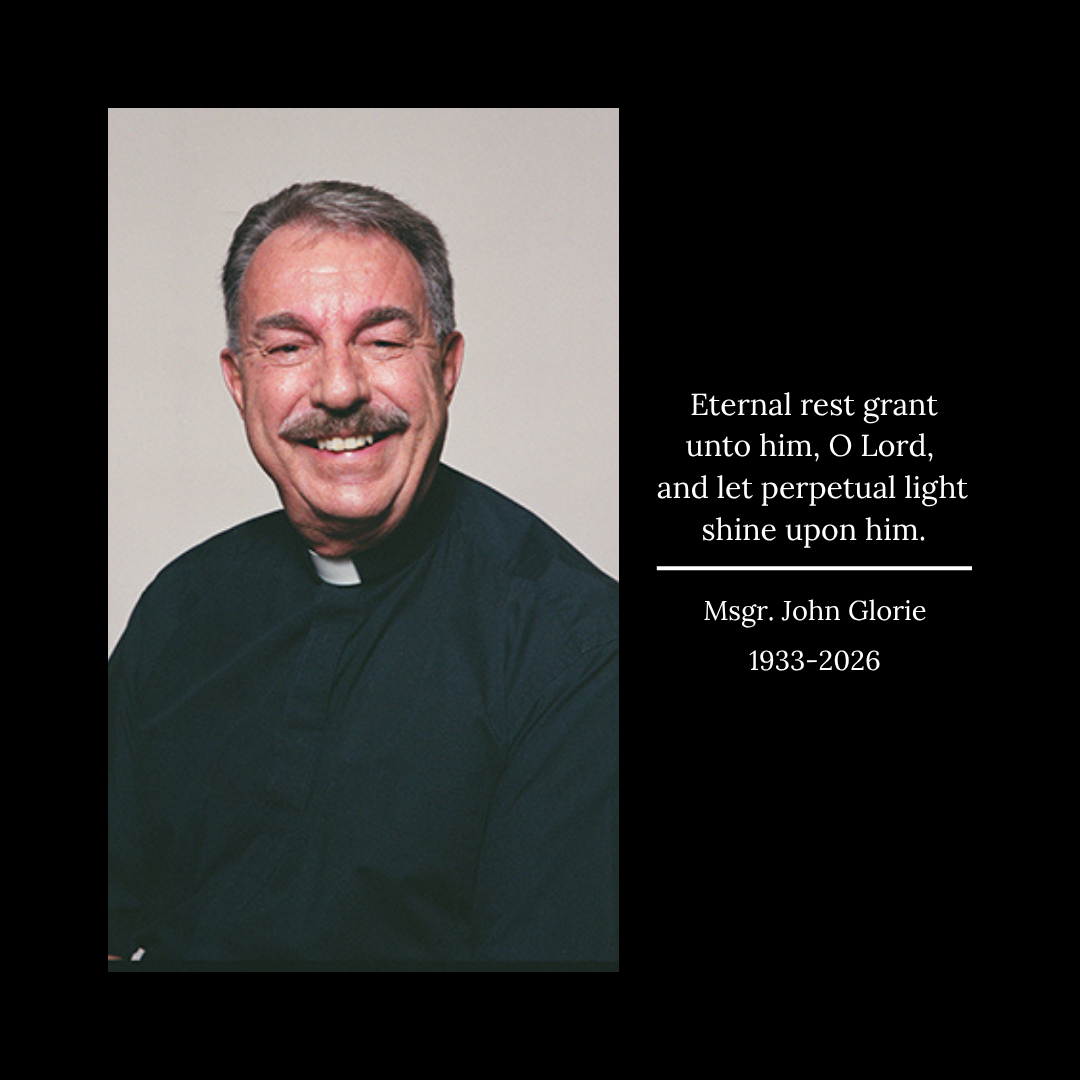
On Aug. 6, Monsignor John Glorie died in West Palm Beach at 93 years old. Besides serving as director of Boystown of Florida for over a decade, he ministered to South Floridians in a variety of other roles – both in charitable roles and within parish and diocesan leadership.
Along with Father Gary Wiesmann from the Diocese of Mandeville, Jamaica, the now 70-year-old Reeves shared with the Florida Catholic a reflection on Glorie’s impact.
A vocation to spiritual fatherhood
Although John William Patrick Glorie spent most of his life in South Florida, he was born July 25, 1933 in Chester, New York. While he was still a child, Glorie’s father and younger brother died. He and his mother traveled south to West Palm Beach in 1944, and Glorie attended Catholic school locally.
On May 21, 1960, he was ordained a priest by Bishop Coleman Carroll at St. Anthony Parish in Fort Lauderdale.
For over 65 years, Father Glorie would spend his life serving as a spiritual father to others as a parish and charity leader, vocational mentor, and educator.
His friend Father Gary Wiesmann was just beginning his first year as a seminarian at Miami’s St. John Vianney College Seminary in 1970 when he originally encountered Father Glorie through a mutual friend. As time went on, the seminarian began to see Glorie as a mentor throughout the toughest moments in his vocational discernment process.
“I was in and out of the seminary three times,” he recalled. “I’ll never forget going to him when I felt the calling to return the third time, saying, ‘John, I’m feeling the call from the Lord again. I think I’d like to return to the seminary.’”
“He looked at me and said, ‘Gary, three strikes and you’re out. Go for it.’” Father Wiesmann chuckled. “He was very supportive and prayerful.”
Directly after Father Wiesmann’s ordination in 1983, he was thrilled to work with Glorie at Church of the Little Flower Parish in Coral Gables, where his mentor served as pastor from 1982-89.
“He actually requested me once I was ordained, and that’s why I ended up at Little Flower,” he said.
Father Wiesmann confirmed that he was not the only one to appreciate Glorie’s counsel. Throughout his life, Glorie provided spiritual guidance to priests and seminarians.
“He never pushed anyone: he simply accompanied them,” said Father Wiesmann. “Some priests will say that in being able to discuss their life and their vocation with him, they are priests because of how he guided them.”
As someone who had lost his father at a young age, Father Glorie’s assignment as director of Boystown of Florida from 1972 through the mid-1980s must have held special meaning for him. Douglas Reeves, who was a resident from the ages of 15-18, said Glorie helped him overcome the challenge to trust.
“When Father Glorie came into my life, I was able to accept someone as a father figure,” he said. “It’s hard to do that if you never had a father or even a mother.”
At Boystown in Miami, many of the teenaged boys residing there came from difficult backgrounds. For Reeves, it’s a place with many fond memories – a place where, under Glorie’s directorship, he found security.
Back then, the area around Kendall facility was totally rural. The stars shone brightly at night: “a light show like no other,” as Reeves put it. The kids rode horses, sighted foxes and raccoons in the scrub, and were given pocket money for the chores they did to keep up their shared home. Reeves made around $1.50 to $2.00 a day from sweeping the gym, and he looked forward to the times when Boystown staff would drive him and the other kids to Dadeland Mall, where they could spend their earnings on movie tickets or other treats.
Although Reeves was reserved when he first came to Boystown, he gradually began going to Glorie for direction, finding in the priest a listening ear. Reeves came to consider him as the father figure he had always been missing.
Before that, “I’d had always had to count on myself,” he said. “It’s hard to do when you’re (a kid).”
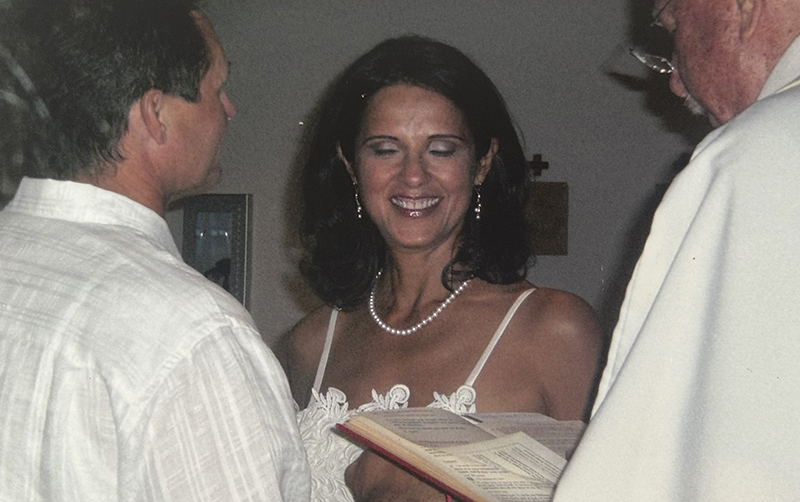
After completing high school, Reeves joined the Navy, later becoming an emergency trauma nurse. He also served for three years as a counselor at Boystown, paying it forward to the community that had shaped him. Throughout it all, Father Glorie remained present for the big and small moments in his life, including presiding over Reeves’ wedding in 2011.
He laughed, remembering a time when he’d crashed Father Glorie’s car. “He never got upset,” he said. “If I needed advice, he would give solid, thought-through advice that I listened to. It’s something I never had growing up.”
Just “Father”
Even after Pope Paul VI honored Father Glorie with the title of Monsignor in 1973, Father Wiesmann can’t recall a single time the priest ever introduced himself by that title.
“While he was grateful for the honor, he always wanted to be known as and seen as just a very happy priest,” he said. “He was always ‘Father.’”
Glorie was a dedicated parish leader. He was pastor of St. Hugh, Miami (1973-82), Church of the Little Flower, Coral Gables (1982-89), and St. Elizabeth of Hungary, Pompano Beach (1991-2001).
Father Wiesmann shared an anecdote from when Glorie ministered to St. Elizabeth of Hungary Parish as administrator and then pastor. When Glorie arrived, the parish community was mainly Anglo. However, the Hispanic population in the area was growing, and Glorie wanted to ensure they felt a sense of belonging. He founded a Hispanic outreach ministry to serve the needs of the growing community.
"He always wanted everyone to feel very much at home in their parish and with their priests," said Father Wiesmann.
Skilled at organization, Glorie also served as associate director of what is now Catholic Charities of the Archdiocese of Miami; helped establish the Marian Center for Children with Disabilities in Opa-locka; and was even commended by President Ronald Reagan for helping facilitate one of Pope John Paul II’s U.S. visits.
Through it all, though, he was just “Father.”
“Probably his legacy will always be his welcoming of all God’s people, no matter who they are, what they’re about, or what their life is like,” said Father Wiesmann. “No judgment, no guile: just saw the presence of the Lord in everyone’s life.”
Glorie retired in 2001, but he still provided spiritual direction, and he also assisted at St. Henry Parish in Pompano Beach, Assumption Parish in Lauderdale-By-The-Sea and Blessed Sacrament Parish in Oakland Park.
Both Father Wiesmann and Reeves were present at Glorie’s funeral service Aug. 14 at St. John the Baptist Parish in Fort Lauderdale. Father Weismann celebrated the Mass, and Reeves delivered a eulogy.
“Father Glorie was always a safe place,” said Reeves. “He was always there for me.”
Photographer: Courtesy
Monsignor John Glorie, far right, presides over the wedding of Douglas Reeves and Maria Lima in Lauderadale-By-The-Sea, Florida in May 2011.